

Whether you are sourcing from Turkish manufacturers or selling into Türkiye, your logistics planning directly affects costs, lead times and customer relationships. This introductory guide explains what to prepare, which questions to ask and how to avoid common shipment delays.
Before your cargo moves, confirm the product requirements, the paperwork, the full cost and who is responsible at each stage.
1. Why Türkiye matters
Türkiye connects Europe, Asia and the Middle East, with an established manufacturing base supporting sourcing and regional distribution. Representative sectors include automotive components, textiles and apparel, machinery, electrical goods, food, furniture and construction materials.
Proximity to European markets can support shorter replenishment cycles and flexible sourcing. Actual lead times depend on supplier readiness, route, clearance and delivery needs—not geography alone.
2. Understand the local logistics landscape
International groups, local forwarders, customs brokers and specialist carriers operate alongside one another. Assess commodity and customs knowledge, accurate documentation, transparent origin and destination charges, clear communication and escalation, and reliable local coordination.
The lowest freight quotation may exclude clearance, handling, storage or final delivery. Request a written breakdown of inclusions, exclusions and potential additional charges before committing.
3. Importing into Türkiye: six pre-shipment checks

- 01
Confirm the classification
GTİP is Türkiye’s tariff classification code, based on the international HS system. A code used abroad may need further Turkish classification; ask your broker to confirm it.
- 02
Check product eligibility
Depending on the goods, permits, conformity checks, labelling, health certificates or other approvals may apply. TAREKS is Türkiye’s electronic risk-based system for certain product-safety inspections—not every shipment.
- 03
Confirm the importer is ready
Identify the importer of record and confirm its tax/customs details, product-specific approvals and customs representation before dispatch.
- 04
Align the paperwork
Ensure the invoice, packing list and transport document use consistent descriptions, quantities, weights and values. Confirm origin or movement documents where applicable. Samples and courier parcels still need appropriate customs information.
- 05
Estimate the landed cost
Obtain a shipment-specific estimate covering freight, clearance, applicable duties and taxes, local handling and delivery. Rates depend on the goods and applicable arrangements.
- 06
Agree responsibilities
Specify the Incoterms® 2020 rule and named place in the contract. Under DAP, the seller arranges carriage to the agreed destination, ready for unloading; the buyer normally handles import clearance, duties and taxes.
4. Sourcing from Türkiye: agree export arrangements early
Collection arranged by the buyer does not mean the buyer handles export clearance under every Incoterm. Document any agreed variation. Golde Xpress recommends confirming early whether the Turkish supplier will use its existing customs broker and what authorisations are needed.
- Collection address, cargo readiness and loading arrangements.
- Package dimensions, gross weight, stackability and suitable packaging.
- Who completes export clearance and supplies the documents.
- Any dangerous-goods, temperature-control or security requirements.
- Carrier cut-offs, clearance windows and final delivery arrangements.
5. Choose the transport mode that fits the shipment
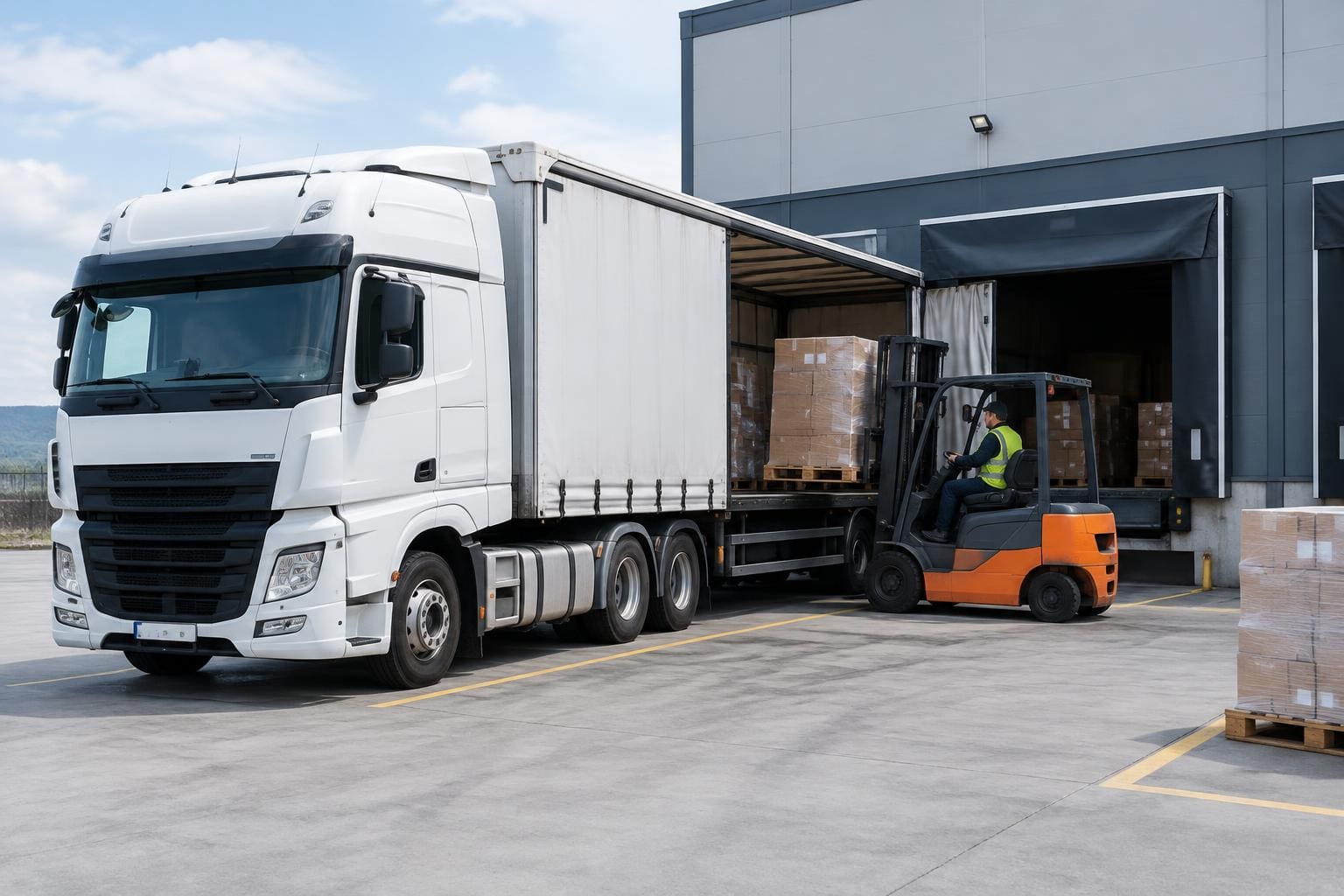
A dedicated road service can sometimes offer competitive door-to-door timing on suitable routes, subject to actual quotations and conditions. Compare the full journey and the cost of delay—not just the headline freight rate.
| Mode | Best suited to | Before booking |
|---|---|---|
| Air freight | Urgent, high-value or time-sensitive goods | Check cut-offs, handling needs and total door-to-door timing. |
| Courier and express | Samples, small consignments and urgent spare parts | Confirm weight/dimension limits, commodity acceptance and clearance arrangements. |
| Ocean freight | Larger, less time-critical consignments | Allow for port handling, clearance and inland delivery. |
| Road freight | Full loads, groupage and selected express van services on suitable routes | Compare border conditions, schedules and end-to-end timing. |
| Multimodal | Shipments combining modes to meet cost and delivery needs | Confirm responsibility at each handover. |
6. Five avoidable mistakes
Where service needs allow, consolidate orders, right-size packaging and compare suitable transport options. Better planning can reduce unnecessary journeys and urgent rework.
- Unclear Incoterms → Agree the rule, named place and responsibilities before ordering.
- Vague descriptions or inaccurate dimensions → Supply precise product and package information.
- Unexpected local charges → Obtain an itemised quotation.
- Holiday disruption → Confirm supplier, broker and carrier operating schedules, including public and religious holidays.
- Selecting on price alone → Assess responsiveness, commodity knowledge and exception handling.
7. Your next step
Sharing this information early helps obtain a more useful quotation and identify requirements before cargo is dispatched.
Contributor
Local insight from Golde Xpress
Golde Xpress is a Türkiye-based freight forwarder focused on air freight and courier & express services. Its 4PL approach provides a single point of coordination across a wider partner network, including ocean, road and rail transport, warehousing, packaging, customs brokerage and cargo insurance. 4PL means coordinating multiple logistics providers through one contact.
Golde Xpress reports experience supporting time-critical and specialist cargo, including aerospace components, pharmaceuticals, perishables, dangerous goods and high-value shipments, subject to applicable requirements.
- Head office
- İzmir, Türkiye
- Operational presence, as supplied by the contributor
- Ankara, London, Istanbul and Mersin

Tolga Göldelioğlu
Tolga is the Golde Xpress contact for this guide and can discuss air freight, courier & express and 4PL shipments to and from Türkiye. Contact: tolga@golde-xpress.com · +90 544 448 18 89.
Tolga on LinkedInMore than freight forwarding. Your dedicated 4PL partner.
https://www.golde-xpress.com/ · tolga@golde-xpress.com
Sources and further reading
Prepared by One Alliance from the supplied Golde Xpress contribution and the guidance linked below. Company experience and operational presence are attributed to the contributor, not independently certified by One Alliance.
Related Insights
Proving Provenance: Country of Origin in Cross-Border Trade
A summary of Hurricane Commerce's October 2026 white paper on country of origin — the legal tests, how the US, EU and UK apply them, why origin now sets the duty on every parcel, and how mislabelling and transshipment are detected and penalised.
Digital Product Passport Requirements: EU, US and Global Schemes
A summary of Hurricane Commerce's October 2026 white paper on Digital Product Passport requirements — what is live in the EU and US, what is changing, and the system capabilities businesses need to cover both regimes.
What has been your biggest challenge when shipping to or from Türkiye? Share your experience with One Alliance—it could help another business avoid the same problem.
Share your experienceThis introductory guide is for general information. Customs rules, duties and documentation requirements can change. Confirm the requirements for your goods, origin and destination with your customs broker or logistics partner before shipping.